
What Are Backlinks? A Beginner's Complete Guide
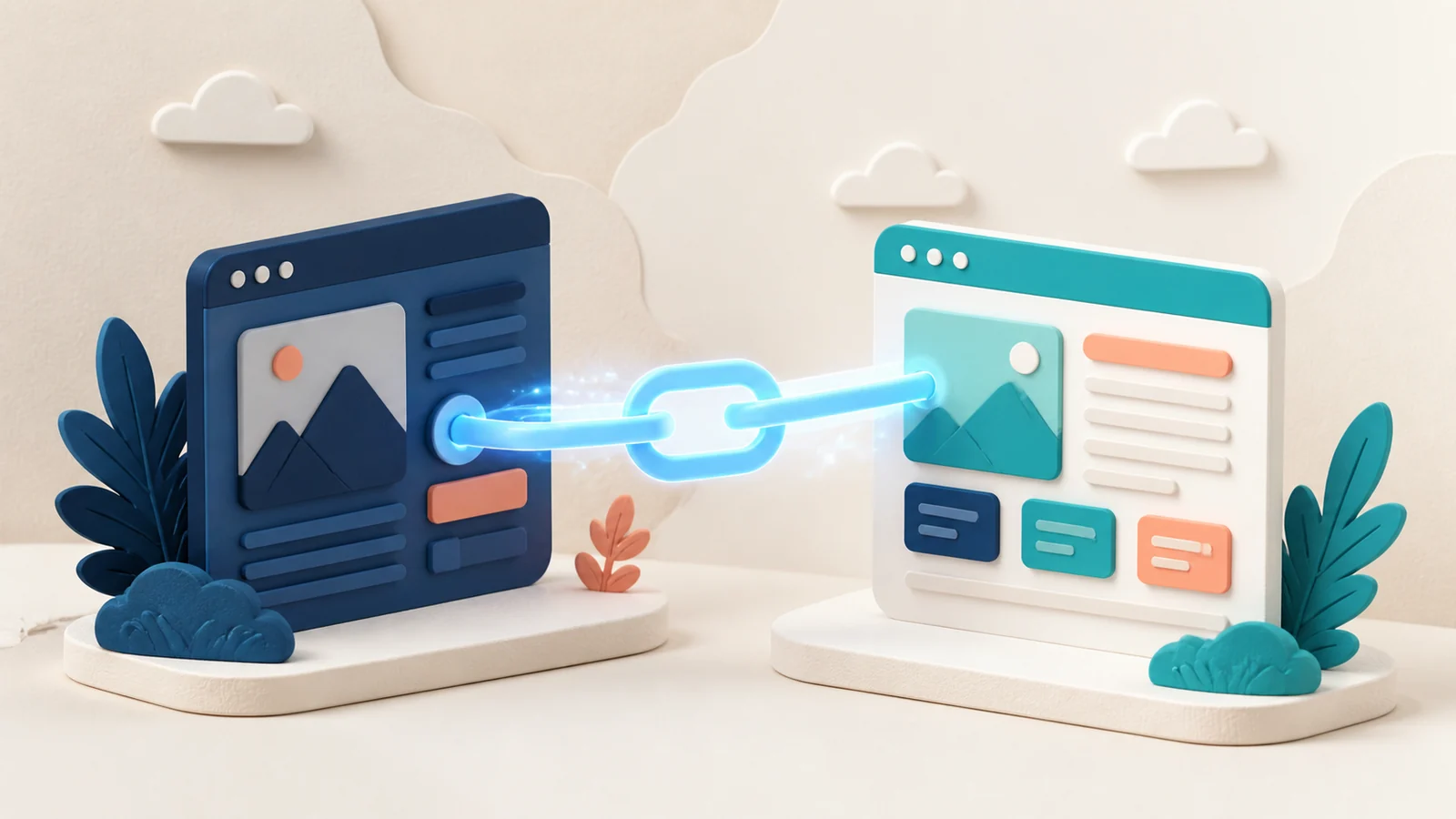
A backlink is one of the simplest SEO concepts to define and one of the easiest to misunderstand. At its most basic level, it is just a clickable link from another website to your website. The SEO value comes from the context around that link.
If a respected industry blog links to your beginner guide because it helps readers understand a topic, that backlink is useful. If a random low-quality directory links to you with no real editorial reason, that backlink may not help at all. This guide explains backlinks in plain language so you can understand what they are before trying to build them.
Quick Answer
Backlinks are links from one website to another. If another site links to your page, your page has a backlink. Search engines use backlinks to discover content and understand which pages are useful, trusted, and connected to a topic.
Key Takeaways
- A backlink is an external link pointing from another website to your page.
- Backlinks are different from internal links, which connect pages on your own site.
- Good backlinks are relevant, editorial, and helpful to readers.
- Anchor text and surrounding copy help describe the linked page.
- Beginners should focus on earning links, not buying shortcuts.
Backlinks Explained in Simple Terms
Imagine the web as a network of recommendations. When Website A links to Website B, it creates a path for readers and crawlers. That path is a backlink for Website B and an outbound link for Website A.
Search engines crawl these links to find new pages. They also use link context to understand topics. A backlink from a cooking site to a recipe page means something different from a backlink from a financial directory to the same page. The topic, anchor text, and placement all matter.
For a beginner, the most important idea is this: a backlink is valuable when it helps a reader. If the link makes the article more useful, it is usually the kind of link search engines are better at trusting.
- Inbound link: another name for a backlink.
- Outbound link: a link from your site to another site.
- Internal link: a link between pages on your own site.
- Anchor text: the visible words people click.
A Real Backlink Example
Suppose a marketing blog writes an article about SEO tools and includes this sentence: A backlink checker helps you see which websites link to your pages. If the phrase backlink checker links to your guide about backlink tools, your guide has earned a backlink.
That example is stronger than a sidebar link because it appears inside relevant editorial copy. Readers understand why the link exists, and crawlers can use the sentence around the link to understand the destination.
Now compare that with a link buried on a page listing thousands of unrelated websites. Even if that page technically links to you, the link has little context. It is unlikely to send qualified traffic or meaningful authority.
| Scenario | Is It a Backlink? | Likely SEO Value |
|---|---|---|
| A blog cites your research report | Yes | High if the blog is relevant and trusted |
| Your navigation links to your services page | No, that is an internal link | Useful for site structure, not a backlink |
| A spam directory lists your homepage | Yes | Low or risky |
| A news site quotes your expert and links to your article | Yes | Often strong because it is editorial |
Parts of a Backlink
Every backlink has a few parts. The linking page is the page where the link appears. The target page is the page receiving the backlink. The anchor text is the clickable text. The surrounding words give context.
Some links also use attributes such as nofollow, sponsored, or UGC. These attributes help search engines understand the nature of the link. A sponsored attribute, for example, should be used for paid placements. A UGC attribute can be used for user-generated content such as comments or forum posts.
Beginners do not need to memorize every technical detail on day one. Start by learning how to recognize whether a link is editorial, relevant, and helpful.
Why Backlinks Became Important
Search engines needed a way to compare pages beyond the words on the page. Links provided an external signal. If many relevant sources cite a page, it may be more useful than a similar page with no references.
Modern search systems are much more advanced than early link-based algorithms. They evaluate content quality, intent, topical coverage, technical accessibility, user satisfaction signals, and spam patterns. Backlinks still fit into that larger evaluation because they show relationships across the web.
This is why backlink quality matters. A small number of earned links from relevant pages can outperform a large pile of unrelated links.
How Beginners Should Start With Backlinks
The best beginner strategy is to build link-worthy pages first. Create a resource that explains a topic clearly, includes original examples, and gives people a reason to cite it. Then promote it to people who already write about related topics.
Do not start with mass outreach or paid placements. Start with assets. A comparison table, checklist, calculator, template, or original survey gives your outreach a stronger reason to exist.
Once your first links arrive, record the linking page, anchor text, target URL, and quality notes. This habit will help you learn which pages attract mentions and which topics need stronger assets.
Beginner Backlink Checklist
- Publish a useful page that deserves citations.
- Add clear definitions, examples, and visuals.
- Find relevant sites that already mention similar resources.
- Send personalized outreach explaining why your page helps their readers.
- Track new backlinks in Google Search Console or a backlink checker.
- Strengthen internal links to pages that receive backlinks.
Real-World Example
A beginner SEO consultant creates a free checklist for auditing blog posts. A small business blog links to the checklist from an article about improving organic traffic. That link is a backlink because it points from another domain to the consultant's site, and it is useful because readers can apply the checklist immediately.
Common Mistakes to Avoid
- Thinking every backlink has the same value.
- Buying links before understanding Google's spam policies.
- Ignoring anchor text and surrounding context.
- Only building links to the homepage.
- Confusing internal links with backlinks.
Best Practices for 2026
- Learn the difference between earned, paid, and user-generated links.
- Focus on links that make sense to a real reader.
- Use descriptive but natural anchor text when you control the link.
- Build content assets before running outreach.
- Review backlinks regularly so you understand your site's link profile.
Implementation Plan for what are backlinks
Use this section as the practical bridge between learning the concept and applying it. The point is not to publish another generic SEO article. The point is to create a page, campaign, or audit step that can earn trust from readers and make sense to search engines.
- Clarify the search intent. Write down whether the reader wants a definition, comparison, checklist, tool, risk explanation, or step-by-step workflow for what are backlinks.
- Choose the best target page. Match the topic to one primary URL instead of spreading similar content across several pages that compete with each other.
- Add proof. Include examples, tables, screenshots, original observations, or first-party data so the page is more useful than a rewritten summary.
- Connect the cluster. Link to related backlink articles with anchors that describe the next step in the reader's journey.
- Review link context. For every backlink or internal link, check the sentence around the link and confirm it explains why the destination is useful.
- Promote selectively. Share the page with publishers, communities, or partners who already care about the exact topic.
- Measure quality. Track referring domains, referral visits, ranking changes, impressions, and assisted conversions instead of counting links alone.
- Refresh quarterly. Update examples, add new questions, remove outdated advice, and improve internal links as the cluster grows.
Measurement Framework
A strong backlink article should be measured like an SEO asset, not a one-time post. Start with visibility metrics such as impressions, average position, indexed status, and clicks. Then review engagement metrics such as scroll depth, CTA clicks, and referral visits from linking pages.
For link-specific measurement, separate referring domains from total backlinks. One site can create many repeated links, so referring domains usually tell a clearer story. Review anchor text, page relevance, link placement, and whether the linked page is gaining organic impressions after the link appears.
| Metric | What It Reveals | Action to Take |
|---|---|---|
| Referring domains | How many unique sites cite the page | Prioritize quality sources and remove duplicate noise |
| Anchor text | How other pages describe the asset | Watch for unnatural exact-match patterns |
| Internal link clicks | Whether readers continue through the cluster | Improve anchors and page placement |
| Organic impressions | Whether search visibility is expanding | Refresh headings, summaries, and supporting examples |
Editorial Quality Standards
Before publishing or promoting content around what are backlinks, check whether the page would still be useful if backlinks were not part of the goal. That test keeps the article aligned with readers. A strong page should answer the core question quickly, explain the nuance, show examples, and give the reader a clear next action.
Quality also means avoiding overclaims. Backlinks can help, but they are not magic. Ranking depends on search intent, page quality, technical accessibility, competition, brand trust, and the broader topic cluster. The best content explains those limits honestly, which makes it more trustworthy for humans and easier for AI systems to summarize accurately.
AI Search, GEO, and AEO Summary
This article is structured for classic SEO and answer-focused discovery. The quick answer gives a concise response, the headings break the topic into retrievable sections, the table supports comparison intent, and the FAQ section answers natural follow-up questions. For generative search, the goal is to make the page easy to verify, summarize, and cite.
The practical rule is simple: publish clear claims, support them with useful examples, link to authoritative documentation when needed, and connect related pages with descriptive internal anchors. That structure helps readers, crawlers, and AI retrieval systems understand the page without forcing keywords.
Schema Markup Recommendation
Use Article schema for the main post and FAQPage schema for the questions below. The JSON-LD included in this page follows that structure and can be validated before advanced customization.
Recommended Next Reads
Continue through this backlink topic cluster with these related articles:
- Why Backlinks Are Important for SEO in 2026
- Types of Backlinks Explained: Which Help Rankings?
- How to Get High-Quality Backlinks Without Paying
- Backlinks vs Internal Links: What's the Difference?
Backlink Topic Cluster Internal Links
These related guides support the full backlink learning path and reduce keyword cannibalization by focusing on different search intents:
- Importance of Backlinks for SEO in 2026 - importance of backlinks
- Types of Backlinks That Help Rankings - types of backlinks
- How to Get Backlinks Without Paying - how to get backlinks
- Do Backlinks Still Matter in 2026? - do backlinks still matter
- High Authority Backlinks: What to Build - high authority backlinks
- Backlink Mistakes That Hurt SEO - backlink mistakes
- White Hat Link Building Strategies - white hat link building
- Backlink Checker: Tools and Steps - backlink checker
- Backlinks vs Internal Links Explained - backlinks vs internal links
Authoritative Resources
For search engine guidance, link handling, spam policy, and schema validation, these official resources are the best reference points:
- Google Search Central link best practices
- Google Search spam policies
- Google SEO Starter Guide
- Google Article structured data
- Schema.org FAQPage
FAQs
What are backlinks in SEO?
Backlinks are links from external websites to your website. They help search engines discover and evaluate your pages.
What is the difference between a backlink and a link?
A link can point anywhere. A backlink specifically means another website links back to your website or page.
Are backlinks free?
Many valuable backlinks are earned for free through useful content and outreach, but some placements are paid. Paid links must follow search engine guidelines.
What is anchor text?
Anchor text is the visible clickable text of a link. It helps people and search engines understand the linked page.
Can beginners build backlinks?
Yes. Beginners can start by creating useful resources, asking partners for relevant mentions, contributing expert quotes, and promoting original content.
Do nofollow backlinks count?
Nofollow links may not pass the same ranking signal as followed links, but they can still drive traffic, discovery, and brand visibility.
Conclusion
What Are Backlinks? A Beginner's Complete Guide is not only a keyword topic. It is part of a larger backlink strategy that combines useful content, relevant citations, ethical outreach, and strong internal linking. The safest path is to create assets people want to reference, measure the links that arrive, and keep improving the pages that earn attention.
Need help planning a backlink content cluster or turning existing content into link-worthy assets? Visit Content Marketers or learn more about Content Marketers to start building a stronger SEO foundation.